
How Brownies Are Packaged for Delivery (And Why It Matters)
|
|
Time to read 10 min
|
|
Time to read 10 min
Brownies designed for delivery rely on both formulation and packaging to maintain their structure during transit. Through individual wrapping, structured placement, and layered protection, brownies can resist movement, preserve texture, and arrive consistently across varying conditions.
When brownies are prepared for delivery, packaging becomes part of the product itself.
Movement, temperature variation, and repeated handling introduce stresses that do not exist in a kitchen or retail setting. Without the right system, even a well-made brownie can shift, lose its shape, or experience surface damage before it reaches the recipient.
Our brownies packaged for delivery must be carefully protected to maintain their structure, texture, and presentation during transit.
Understanding how brownies are packaged for delivery reveals how protection, structure, and presentation work together to ensure consistency from dispatch through to arrival. Well-designed packaging is essential for reliable brownie delivery across Australia, ensuring each box arrives intact, consistent, and presentation-ready.
Brownies are packaged for delivery using a combination of individual wrapping, structured placement, and layered outer protection.
Each brownie is wrapped to protect its surface and moisture balance, then arranged in a controlled layout to prevent movement during transit. Outer packaging absorbs handling and environmental impact, allowing the brownies to maintain their structure and presentation from dispatch through to arrival.
This system is designed to minimise movement, reduce friction, and protect texture across varying delivery conditions. When combined with a dense, chocolate-led brownie structure, packaging allows brownies to travel reliably while maintaining consistency.
Brownies packaged for delivery maintain their structure through a combination of controlled placement, protective wrapping, and a dense, cohesive formulation.
By reducing movement, limiting friction, and protecting each piece individually, the packaging system supports the brownie’s internal structure throughout transit. This allows brownies to arrive intact, with their texture and presentation preserved from dispatch to delivery.
Packaging is not simply about appearance — it is about performance.
During delivery, brownies are exposed to:
Each of these introduces risk.
Without proper packaging, brownies may:
Packaging is therefore designed not just to protect, but to prevent these failure points from occurring in the first place.
If you're considering how brownies perform across distance, our brownie delivery Australia service is built around products designed to maintain their structure and presentation throughout transit.
One of the most effective tools in maintaining brownie integrity during delivery is individual wrapping.
Each brownie is enclosed separately in protective foil, which:
This creates a controlled environment for each brownie, allowing it to retain both structure and consistency during transport.
It also supports recovery after delivery, as each piece remains intact and stable.
One of the most critical elements of delivery packaging is movement control.
Brownies are not simply placed into a box — they are positioned deliberately.
For example:
This controlled placement ensures:
From a structural perspective, eliminating movement is one of the most effective ways to maintain product integrity.
For a closer look at how different brownie formats are structured, you can explore our brownie collection
Effective packaging is designed with failure in mind.
Rather than reacting to problems, it anticipates and prevents them.
Key risks include:
Each element of packaging addresses one or more of these risks.
For example:
This creates a system where brownies are not simply protected — they are stabilised throughout the delivery process.
Effective packaging is rarely accidental — it is the result of deliberate design.
In product development, packaging is considered alongside the product itself. This includes understanding:
Packaging systems are then developed to support those behaviours.
For brownies, this means:
This approach reflects a broader understanding of how food products perform beyond the kitchen — particularly in real-world delivery environments.
This is why brownies packaged for delivery rely on both formulation and packaging working together.
Temperature is a variable that cannot be controlled completely during delivery, but it can be managed.
Packaging helps:
Brownies, particularly those with a chocolate-led structure, may soften slightly in warmth but retain their overall structure.
In warmer conditions, additional measures such as cooling elements may be introduced. However, well-formulated brownies combined with protective packaging typically perform reliably without excessive intervention.
Packaging is only effective when paired with the right product.
Brownies designed for delivery typically feature:
These characteristics allow the brownie to:
Packaging enhances these qualities by:
This combination is what enables brownies to travel across long distances while maintaining their intended texture.
Packaging brownies requires a different approach to many other baked goods.
Unlike cakes or pastries, brownies have a denser and more cohesive structure, which allows them to hold their shape more effectively during movement.
Instead of relying solely on rigid external supports, brownie packaging focuses on:
This allows brownies to travel more reliably while preserving both their structure and presentation.
Beyond internal structure, outer packaging provides an additional protective layer.
This includes:
These layers help:
While often associated with presentation, this outer layer is critical in maintaining consistency during real-world delivery conditions.
Packaging is not only functional — it is also experiential.
When a box is opened, it should reflect:
Each individually wrapped brownie signals:
Rather than relying on excessive plastic or air-filled materials, a more refined packaging approach balances:
The result is an experience that feels deliberate and aligned with the product itself.
In real-world conditions, brownies may travel:
They pass through:
A well-developed packaging system ensures brownies remain:
If you're planning to send brownies across locations, a well-designed packaging system ensures reliable delivery, maintaining structure and presentation from dispatch through to arrival.
The objective of packaging is not perfection — it is consistency.
A well-packaged brownie:
This reliability is essential for:
Effective packaging is often defined by small decisions rather than large ones.
While the overall system — wrapping, structure, and outer protection — provides the foundation, it is the precision within that system that determines how well brownies perform during delivery.
For example:
Even minor inconsistencies in these areas can lead to:
This is why packaging is not simply about containment — it is about control.
In a well-designed system, each brownie is positioned deliberately, with just enough structure to hold it in place without compressing it. The goal is to create stability without introducing stress.
This level of precision often comes from experience — understanding how a product behaves not just in ideal conditions, but in real-world transit environments where variables are constantly changing.
When done well, these small details become invisible to the customer. The brownies arrive intact, consistent, and ready to enjoy — without any indication of the complexity behind their journey.
Packaging becomes more complex when brownies are prepared not just for individual delivery, but for larger orders and broader distribution.
At small scale, it is possible to manage each box with close attention. However, as volume increases — whether for corporate gifting, events, or wider distribution — the packaging system must remain consistent without relying on constant adjustment.
This introduces a different challenge: maintaining the same level of protection, presentation, and reliability across multiple units, destinations, and handling environments.
At scale, packaging must account for:
A well-developed system allows each box to perform independently, without variation in outcome. This is achieved through:
In practice, this means that whether a single box is delivered locally or multiple boxes are sent across different locations, the result remains consistent.
This level of reliability is not simply a function of packaging materials, but of system design — where structure, formulation, and packaging work together as a unified approach.
It is this consistency at scale that allows brownies to maintain their integrity not just once, but repeatedly across different delivery scenarios.
When sending brownies, packaging determines:
A well-protected product:
Protective materials absorb impact, but controlled placement prevents movement in the first place.
If brownies are allowed to shift within a box, friction and pressure points can develop regardless of how much outer protection is used. Structured placement — where each brownie sits securely in position — eliminates this internal movement, reducing the likelihood of edge damage or surface scuffing.
In practice, a well-designed layout often does more to preserve product integrity than additional layers of cushioning.
Individual wrapping creates a micro-environment around each brownie.
This helps regulate moisture, reduce exposure to air, and prevent direct contact between pieces. It also allows each brownie to respond independently to movement and temperature changes, rather than being affected by surrounding items.
This separation is particularly important during transit, where even small amounts of friction can impact surface texture and presentation.
Effective packaging systems are designed to prevent several specific failure points, including:
Rather than reacting to these issues after they occur, a well-designed system anticipates and eliminates the conditions that cause them.
Brownies typically have a denser, more cohesive structure than cakes, which allows them to hold their shape more effectively under movement.
While cakes often rely on rigid supports to prevent collapse, brownies are better suited to controlled placement and surface protection. This means packaging can focus more on stabilising the environment rather than structurally supporting the product.
Packaging and formulation work together as a system.
A well-formulated brownie — particularly one with a balanced, chocolate-led structure — is naturally more stable. Packaging enhances this by reducing external stress and maintaining positioning during transit.
If either element is lacking, performance can be affected. A strong formulation without proper packaging may still experience damage, while packaging alone cannot compensate for a structurally weak product.
Temperature cannot be fully controlled during delivery, but packaging helps manage its effects.
Packaging can buffer against rapid changes, protect from direct exposure, and maintain a more stable internal environment. While brownies may soften slightly in warmer conditions, a well-designed system allows them to retain their structure and recover once cooled.
In some cases, additional cooling elements may be used, but often the combination of formulation and packaging provides sufficient stability.
Consistency at scale relies on repeatable systems rather than individual adjustments.
This includes:
Each box is designed to function independently, ensuring that whether a single delivery or multiple shipments are sent, the outcome remains consistent.
Yes — packaging plays a role in how effectively brownies recover after transit.
By protecting structure and minimising movement, packaging helps preserve internal cohesion. This allows brownies to stabilise more easily once refrigerated and return to their intended texture when brought back to room temperature.
Poor packaging, on the other hand, can introduce damage that cannot be reversed after delivery.
Brownies packaged for delivery are protected through a combination of individual wrapping, controlled placement, and layered outer packaging designed to minimise movement and absorb external stress.
Each brownie is sealed in its own foil wrap, which helps maintain moisture balance, protect surface texture, and prevent friction between pieces. The brownies are then arranged in a structured format — typically in even rows with a central divider — so each piece sits snugly in place without shifting during transit.
This internal structure is critical. By eliminating movement inside the box, the risk of edge damage, surface scuffing, and structural distortion is significantly reduced.
Outer packaging adds a further layer of protection. Rigid cartons, tissue-lined interiors, and cushioning materials help absorb vibration, compression, and repeated handling across the delivery journey.
When combined with a dense, chocolate-led brownie formulation designed to hold its shape, this packaging system ensures brownies arrive intact, consistent, and ready to enjoy — even after travelling across varying delivery conditions.
By Those Who Know Luxury






Deborah Peralta
About the Author
Deborah is a food scientist and marketing professional with a background in new product development, brand management and new business development for major food brands. She co-founded Dello Mano with Bien in Brisbane in 2006 and has spent 20 years developing handmade brownies, cakes and other foods through the business. Her work combines practical food knowledge, product development experience and the day-to-day realities of building an independent food brand.
Explore Cakes and Gifts
Browse our handmade cakes, brownies and gifts for birthdays, celebrations and thoughtful giving.


Imagery Note
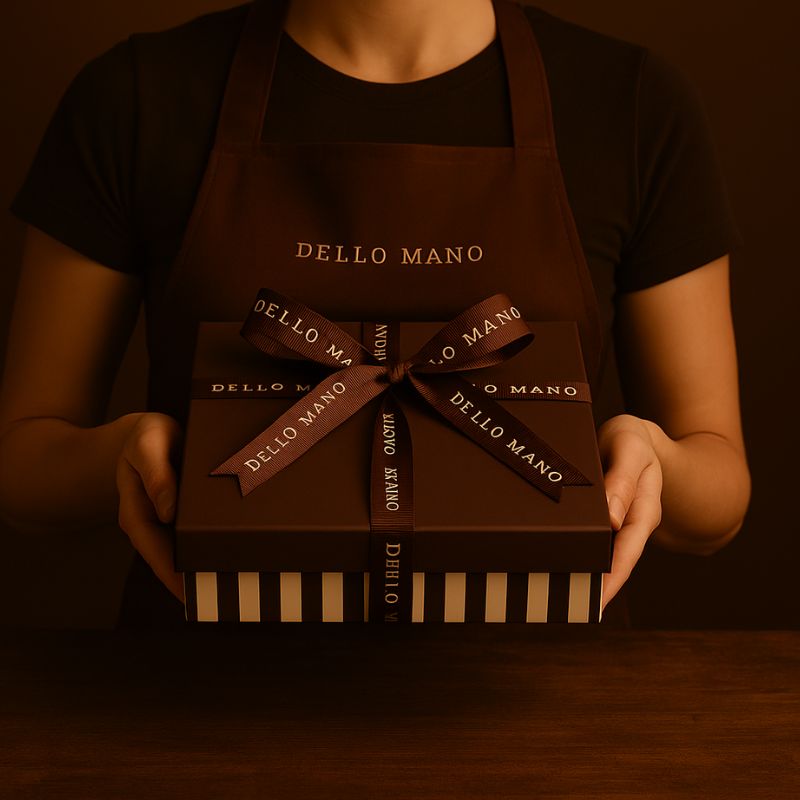
All imagery is created for Dello Mano. Our cakes and brownies are photographed and styled by our team, while some supporting scenes may be artistically generated or enhanced to reflect our handmade aesthetic. Each image is intended to represent the care, craft and calm that shape Dello Mano.

