
How to Choose Wedding Favours Guests Actually Enjoy
|
|
Time to read 8 min
|
|
Time to read 8 min
This article explains how to choose wedding favours that guests genuinely enjoy, focusing on handmade food favours such as brownies and cookies. It covers why taste, presentation, and consistency matter for weddings and events, how wedding planners and couples approach favour selection, and why food favours that travel well are often preferred for Australian weddings. The article also explores how handmade preparation influences guest behaviour and overall wedding experience.
Wedding favours occupy a quiet but important place in any celebration. They sit at the intersection of planning, hospitality, and memory — a small object intended to acknowledge each guest and mark the occasion. Many couples searching for wedding favours in Australia are looking for something guests will genuinely enjoy rather than simply admire.
Yet many couples and planners share the same concern: Will the favours actually be enjoyed, or politely left behind?
At Dello Mano, we’ve spent many years creating handmade food for celebrations of all kinds. Over time, we’ve noticed a simple truth emerge — wedding favours are experienced very differently when they’re made to be genuinely enjoyed, rather than simply symbolising a gesture.
This article explores what makes a wedding favour memorable, why food favours are so often chosen, and how couples and planners can approach the decision with clarity and confidence.
Traditionally, wedding favours serve three purposes:
To acknowledge and thank each guest
To reflect the tone and values of the celebration
To offer a small moment of generosity
In practice, however, favours can sometimes become an obligation rather than an experience. They may be chosen to match a colour palette, theme, or trend, without much consideration for how guests will actually interact with them.
When this happens, favours often sit untouched on tables, admired briefly, then left behind at the end of the night.
A well-chosen favour does something quieter and more natural. It integrates into the flow of the celebration and becomes part of the shared experience, rather than something separate from it.
Food has always played a central role in celebration. Across cultures, offering food is one of the most instinctive ways to show care, welcome, and generosity.
For weddings, food favours are often chosen because they:
Feel inclusive and universally understood
Are easy for guests to enjoy without explanation
Offer a sensory experience rather than a symbolic one
When food is made well and presented thoughtfully, it doesn’t need instruction. Guests instinctively understand how to engage with it.
That simplicity is one of its greatest strengths.
Not all food favours are experienced equally.
Some are designed primarily for appearance — chosen to complement a table setting or follow a visual theme, with taste as a secondary consideration. Others are produced in large volumes where consistency is prioritised over flavour or care.
There is nothing inherently wrong with these approaches, but they often result in favours that are admired rather than enjoyed.
By contrast, food favours that are:
handmade
thoughtfully prepared
balanced in flavour
and presented with restraint
tend to be engaged with differently. Guests recognise care, even when it isn’t explained to them.
Taste communicates effort in a way packaging alone cannot.
Because our wedding favours are handmade and made to be genuinely enjoyed, they’re often experienced differently to traditional favours.
At a recent wedding, we were told that as the evening unfolded and guests took to the dance floor, favours began quietly disappearing from neighbouring tables — not as a novelty, but simply because people were enjoying them.
There was no announcement, no prompting, and no expectation. Guests engaged naturally, guided only by taste and curiosity.
Moments like this reflect something planners already understand: when food is made with care and tastes good, guests respond instinctively. The favour becomes part of the celebration itself, rather than something politely left behind at the end of the night.
For couples, wedding favours are often one of many decisions competing for attention. It can be tempting to choose something quickly and move on, trusting that the gesture alone is enough.
For planners, however, favours carry additional considerations:
reliability at scale
consistency across place settings
ease of placement and distribution
confidence that guests will respond positively
When a favour is well received, it removes friction rather than adding to it. There are fewer questions, fewer hesitations, and fewer items left behind at the end of the night.
This creates a smoother experience not only for guests, but for everyone involved in the planning and execution of the event.
Handmade food carries a particular kind of meaning. It signals time, attention, and human involvement — qualities that align naturally with weddings and significant celebrations.
When food is handmade in small batches, it tends to:
prioritise flavour over efficiency
reflect consistency without uniformity
feel personal rather than generic
These qualities don’t announce themselves loudly, but they are felt.
For wedding favours, this sense of care often translates into a more genuine guest experience. The favour feels like part of the celebration, not an afterthought.
Presentation still matters — but restraint is key.
Wedding favours work best when they:
sit comfortably within a table setting
don’t require additional explanation
feel intentional without drawing attention away from the event
Individually boxed or foiled food favours integrate seamlessly into place settings, welcome tables, or gift displays. They arrive ready to present, reducing the need for on-the-day styling or handling. Individually wrapped Luxury Brownie Cubes are one example of how handmade food favours can integrate naturally into wedding place settings while remaining simple for planners to manage. Couples can also explore our handmade wedding favours for edible favour options designed for weddings, events and guest gifting.
This is particularly important for planners managing larger guest numbers or multiple events across a wedding weekend.
For many couples, especially those planning destination or interstate weddings, logistics play a significant role in decision-making.
Food favours that:
travel well
maintain quality over time
and arrive ready to present
offer flexibility without compromising experience.
This is one reason wedding favours in Australia are often chosen for their ability to travel well, particularly when celebrations involve interstate guests or destination planning.
Consistency becomes an asset rather than a limitation.
Experienced wedding planners understand that every element of a celebration contributes to how guests move through the event. Wedding favours are no exception.
For couples planning a fuller dessert or celebration table, our Wedding Cake Lookbook offers inspiration for handmade cakes designed for weddings and intimate events.
When favours are chosen thoughtfully, they can support pacing, atmosphere, and the overall sense of hospitality. Food favours in particular offer flexibility. They may be enjoyed during the event, taken home, or shared between guests, allowing each person to engage in a way that feels natural.
This adaptability is especially valuable at larger celebrations, where guest preferences and behaviours vary. Rather than directing attention or requiring explanation, a well-chosen favour simply fits.
For planners, this means fewer rigid expectations and more confidence that the favour will be well received. The favour becomes part of the background rhythm of the celebration — present, generous, and quietly effective.
Chocolate, when handled properly, offers a particularly suited medium for wedding favours.
Its qualities — depth of flavour, balance, and familiarity — lend themselves to moments of shared enjoyment rather than novelty. When chocolate is integrated throughout a bake, rather than layered for effect, the experience unfolds slowly and calmly.
For couples considering chocolate as part of their celebration, our handmade wedding favours collection includes edible favour ideas designed to feel considered, generous and easy for guests to enjoy.
These same principles apply when chocolate is chosen as a wedding favour. When flavour is balanced and integrated, the favour feels generous without being overwhelming.
When selecting wedding favours, it can help to ask a simple question:
How do we want guests to engage with this?
If the answer is:
quietly
naturally
and with genuine enjoyment
then taste, care, and presentation become the guiding criteria.
Favours that meet these criteria tend to support the celebration rather than compete with it. They feel appropriate without explanation and meaningful without performance.
Couples and planners looking for guidance on quantities, presentation, and delivery can explore our Wedding Favours & Events page to see how handmade brownie cubes and cookies are used across weddings and celebrations.
The most memorable wedding favours are rarely the most elaborate. They are the ones that guests engage with instinctively — because they are enjoyable, thoughtful, and made with care.
When that happens, the favour becomes part of the celebration itself.
Not a gesture to be acknowledged, but a moment to be shared.
Couples and planners often ask a few practical questions when choosing wedding favours. Here are some of the most common.
Most couples order one favour per guest. Wedding planners often recommend having a small number of extra favours available to allow for last-minute guest changes.
Edible wedding favours are often chosen because guests naturally engage with them. Handmade food favours such as brownies, cookies, or chocolates provide a small moment of enjoyment and are less likely to be left behind at the end of the celebration.
Favours that are simple, thoughtful, and genuinely enjoyable tend to be the most appreciated. Many couples choose food-based favours because they offer a shared sensory experience rather than a purely decorative gesture.
Many couples prefer favours that can be prepared or delivered ahead of the wedding day. Individually wrapped food favours that travel well allow planners and couples to organise place settings without last-minute preparation.
Many couples look for wedding favours that can be prepared ahead of time and delivered safely to their venue. Individually wrapped food favours that travel well, such as handmade brownies or cookies, can be delivered Australia-wide and prepared in advance of the celebration.
Many couples look for wedding favours that suit different dietary preferences. Some handmade bakery items may offer gluten-friendly or alternative ingredient options depending on the product. Because wedding favours are often prepared in shared kitchens, couples with specific dietary requirements should check ingredient information and allergen policies before ordering. Our team is always happy to provide guidance when selecting wedding favours for different guest needs.
By Those Who Know Luxury




Deborah Peralta
About the Author
Deborah is a food scientist and marketing professional with a background in new product development, brand management and new business development for major food brands. She co-founded Dello Mano with Bien in Brisbane in 2006 and has spent 20 years developing handmade brownies, cakes and other foods through the business. Her work combines practical food knowledge, product development experience and the day-to-day realities of building an independent food brand.
Explore Cakes and Gifts
Browse our handmade cakes, brownies and gifts for birthdays, celebrations and thoughtful giving.


Imagery Note
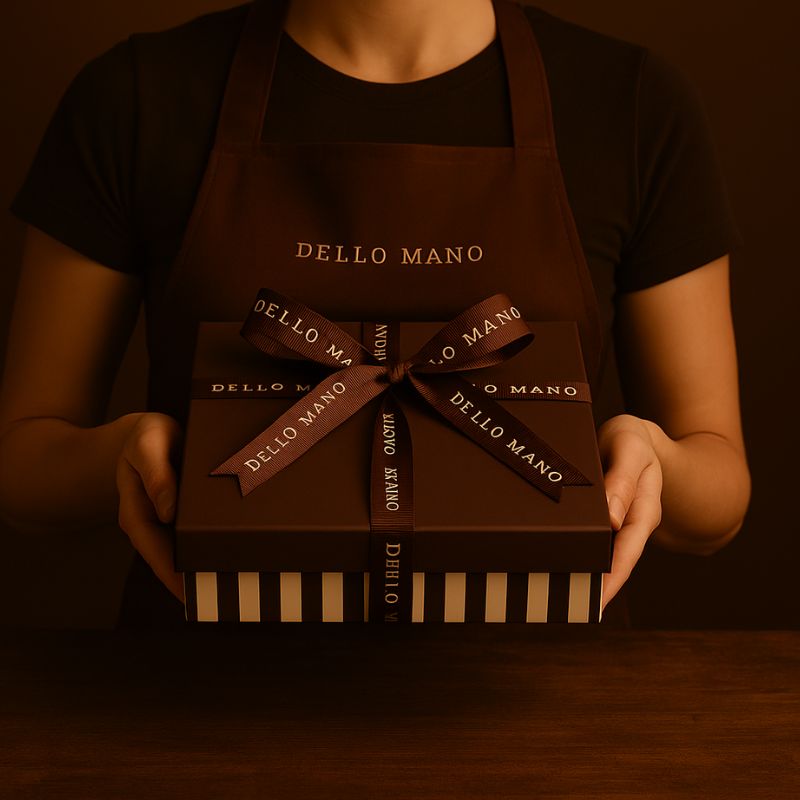
All imagery is created for Dello Mano. Our cakes and brownies are photographed and styled by our team, while some supporting scenes may be artistically generated or enhanced to reflect our handmade aesthetic. Each image is intended to represent the care, craft and calm that shape Dello Mano.

